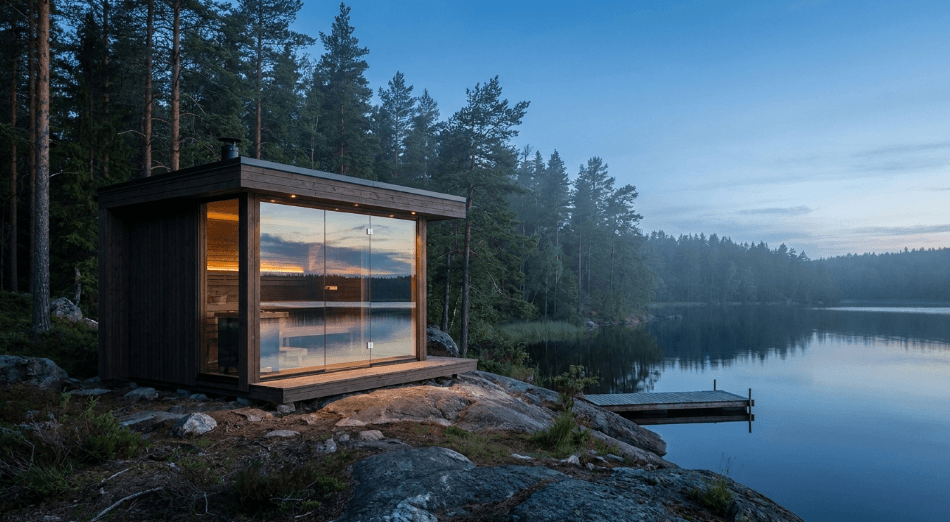
A properly vented outdoor sauna uses two small fixed openings, a low intake near the heater and a high exhaust on the opposite wall or ceiling, to keep a slow, continuous flow of fresh air moving through the cabin without dumping the heat the way opening the door does. Skipping proper venting is one of the most common mistakes in home sauna builds, and it shows up as stale air, uneven heat, and a heater that never quite locks in a stable temperature.
How does air actually move through a working sauna?
Hot air rises and cold air sinks, and a good vent layout uses that basic physics instead of fighting it. Fresh air enters low, typically 4 to 8 inches off the floor near the heater, where it passes over the hot stones and rises as it warms. It circulates through the cabin, gets breathed and used, and exits through a higher vent, often near the ceiling or built into the upper wall on the side opposite the heater. This creates a gentle, continuous cycle rather than a draft, refreshing the air every few minutes without anyone noticing a breeze. Cabins without this layout rely entirely on door openings for fresh air, which works but wastes a large percentage of the heat built up during a session every time someone steps out.
Why does vent placement matter more than vent size?
A vent in the wrong spot can undercut the whole system regardless of how large it is. Placing the intake too high lets it pull in air that has already been heated near the ceiling instead of drawing fresh air from outside, which stalls circulation. Placing the exhaust too low lets heat escape before it has done any useful circulating work in the upper part of the cabin, where sitting or standing users actually feel most of the temperature. The low-intake, high-exhaust arrangement, sometimes with a third small vent under the heater itself on wood-burning models to feed combustion air, is the layout used across most well-designed traditional and cabin-style saunas, and it holds up whether the unit is a small 2-person model or a full 8-person cabin.
What evidence exists for heat exposure and cardiovascular health?
Regular sauna bathing has been studied most extensively in Finnish cohort research, which has found frequent sauna use, generally four to seven sessions a week among study participants, associated with lower rates of cardiovascular events and all-cause mortality compared to less frequent use. A 2018 review in Mayo Clinic Proceedings summarized this evidence, describing heat exposure’s effects on heart rate, blood pressure, and vascular function as broadly similar to the cardiovascular response seen during moderate exercise. These are association findings from observational cohorts, not proof that sauna use itself prevents disease, and the studies cannot rule out that people who sauna frequently also tend to have other healthy habits. A companion 2023 Mayo Clinic Proceedings review found similar associations held even after accounting for several other lifestyle factors, though the authors were careful to frame the findings as suggestive rather than conclusive.
Does ventilation quality affect any of this?
The cardiovascular research generally studies sauna heat exposure broadly rather than isolating ventilation as a variable, so there is no direct study proving that better airflow changes the health outcome. What ventilation clearly does affect is comfort and consistency, which in turn affects whether someone actually uses the sauna often enough for any of the frequency-linked associations in the research to plausibly apply. A stuffy, badly vented cabin that feels unpleasant after eight minutes discourages the kind of regular use the observational studies are built around, while a well-vented one that stays comfortable through a full 15 to 20 minute session makes consistent use easier to sustain.
What should buyers check on a vent system before purchase?
Look for adjustable covers on both intake and exhaust vents, since being able to close them partway helps the cabin reach temperature faster on cold days and open them fully for maximum freshness on milder ones. Check that vent openings are sized appropriately for the cabin’s cubic footage rather than a single generic size used across a whole product line, since a vent sized for a 2-person barrel will underventilate an 8-person cabin. Buyers comparing cabin sizes and vent configurations side by side can look through the SweatDecks catalog for spec sheets that list vent placement and dimensions alongside heater wattage, which is where the two specs really need to be considered together rather than separately.
What ventilation mistakes show up most in DIY builds?
The most common error is sealing a cabin too tightly in an effort to save heat, treating it like insulating a house rather than venting a working sauna. A completely sealed box heats up fast but the air inside stagnates within a few minutes, humidity spikes unevenly near the stones, and the space starts to feel heavy rather than clean. The second common mistake is putting both vents on the same wall at similar heights, which lets air short-circuit between them without ever really circulating through the room. A third is skipping a vent near a wood-burning heater’s firebox entirely, which can starve the fire of draw and cause smoke to back up into the cabin instead of drawing properly up the flue.
Retrofitting vents into an existing cabin is usually straightforward. A hole saw and a manufactured vent cover with a sliding damper can be added to most cedar or pine paneling in under an hour, and the cost of parts is typically under $40 per vent. Anyone unsure where to cut should measure the heater’s placement first and mirror the low-intake, high-exhaust pattern on the wall diagonally opposite it, which gives air the longest possible path across the room before exiting.
Frequently Asked Questions
Why does an outdoor sauna need vents if the door lets air in?
Opening the door dumps most of the built-up heat at once and lets in a burst of cold air. Fixed vents provide a slow, continuous exchange that keeps oxygen and humidity balanced without losing the working temperature.
Where should the intake and exhaust vents be placed?
The standard layout places the intake vent low on the wall near the heater, so incoming air passes over the hot stones, and the exhaust vent high on the opposite wall or ceiling, letting warm air pull out from top after circulating.
Can too much ventilation make a sauna hard to heat?
Yes. Oversized or unshielded vents let heat escape faster than the heater can replace it, especially in cold weather. Adjustable vent covers let owners dial airflow up for freshness or down for faster heat-up and higher peak temperature.
Does good ventilation affect how hot the sauna feels?
Yes, indirectly. Proper airflow keeps humidity from building up unevenly, which affects perceived heat more than the thermometer reading alone. A stuffy, poorly vented cabin can feel oppressive at 160 degrees while a well-vented one feels comfortable at 180.
References
- Hussain, J. et al. “Cardiovascular and Other Health Benefits of Sauna Bathing: A Review of the Evidence.” Mayo Clinic Proceedings, 2018. https://pubmed.ncbi.nlm.nih.gov/30077204/
- “Does the Combination of Finnish Sauna Bathing and Other Lifestyle Factors Confer Additional Health Benefits? A Review of the Evidence.” Mayo Clinic Proceedings, 2023. https://pubmed.ncbi.nlm.nih.gov/37270272/
- Laukkanen, T. et al. “Effects of heat and cold on health, with special reference to Finnish sauna bathing.” American Journal of Physiology – Regulatory, Integrative and Comparative Physiology, 2018. https://pubmed.ncbi.nlm.nih.gov/29351426/
- “Clinical Effects of Regular Dry Sauna Bathing: A Systematic Review.” Evidence-Based Complementary and Alternative Medicine, 2018. https://pubmed.ncbi.nlm.nih.gov/29849692/